
What train sets can a preschooler build without adult help?
Nov 20, 2026
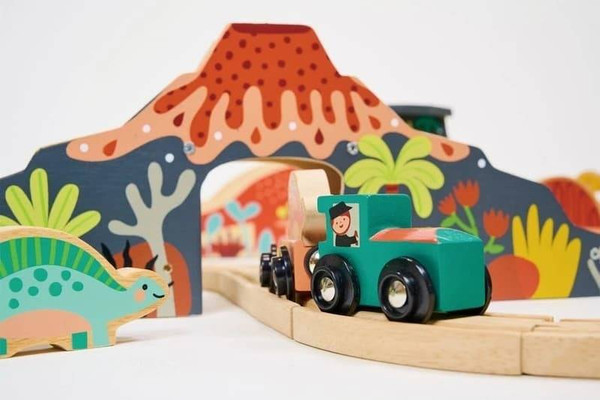
For a preschooler who wants to build their own railway, a push-along wooden train set is often the simplest place to start. Your child lays two rails on the floor, fits the rounded end of one into the cut-out on the next and pushes the engine across. The train can make its first trip as soon as those two pieces meet.
Look for track that joins directly, with no wiring, batteries or tiny screws and clips needed to build the line or run the push-along engine. Larger sets often include small figures, signs and scenery. Those can stay in the box for the first build. Check the age guide for the whole set when choosing one for your child.What to look for in a train set a preschooler can build alone
Start with the layout your child can make today. The Hape Dinosaur Train Bucket Set is rated from 18 months and the other sets below are rated from 3 years. Even within the same age range, joining a few rails and closing a figure eight are quite different tasks.
With eight large curves in the bucket, your child can pick out three pieces of the same shape. Join them so they bend the same way, park a dinosaur at the far end and push a carriage over to collect it. The route works as soon as the first two pieces meet. Next time, turn the last curve the other way and see where the dinosaur needs to stand.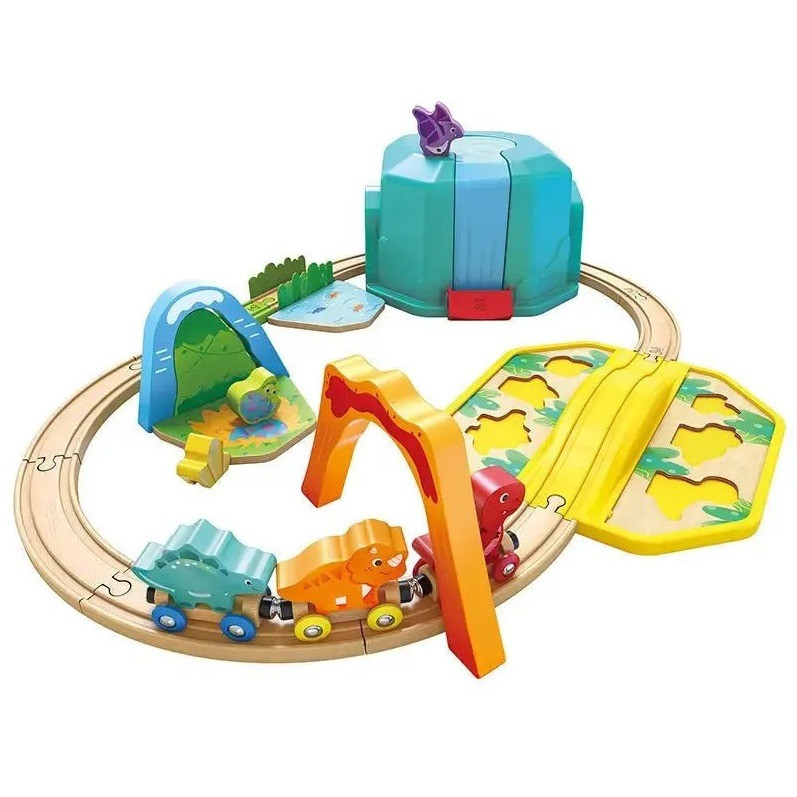
Choose this one for a child who likes making their own little town. Set two of the buildings on the floor and let your child lay the interlocking rails from one to the other. If the route falls short, they can move the building beside the last rail and start driving. The bridges can wait until they want to build upwards.
The finished railway is a figure eight, but your child can give the passenger a ride well before they can build that shape. Stand the passenger and luggage next to one rail, let your child add a few more, then place the rail worker at the other end. They can couple the engine and carriage, collect the passenger and drive. Try the full figure eight together when they’re interested in how the two loops meet.
The crossing gives a child a clear place to start building. Try fitting one rail to each side, then roll the engine across and lower the gate while the tipper truck waits. That short stretch is enough for the first game. When your child wants to unload a container, they can extend one side of the line to reach the magnetic crane.
Once your child can build a route and fix a loose join on their own, try adding a choice of destinations. The Viga 90-piece set includes a switching track, a cargo train, a passenger train and farm animals. Build a main line first, then invite your child to add a branch that takes the cargo train to the farm. The new puzzle is deciding where to put the switch so both trains can reach their stops. Save the bridge for another build if lining up the supports needs an extra pair of hands.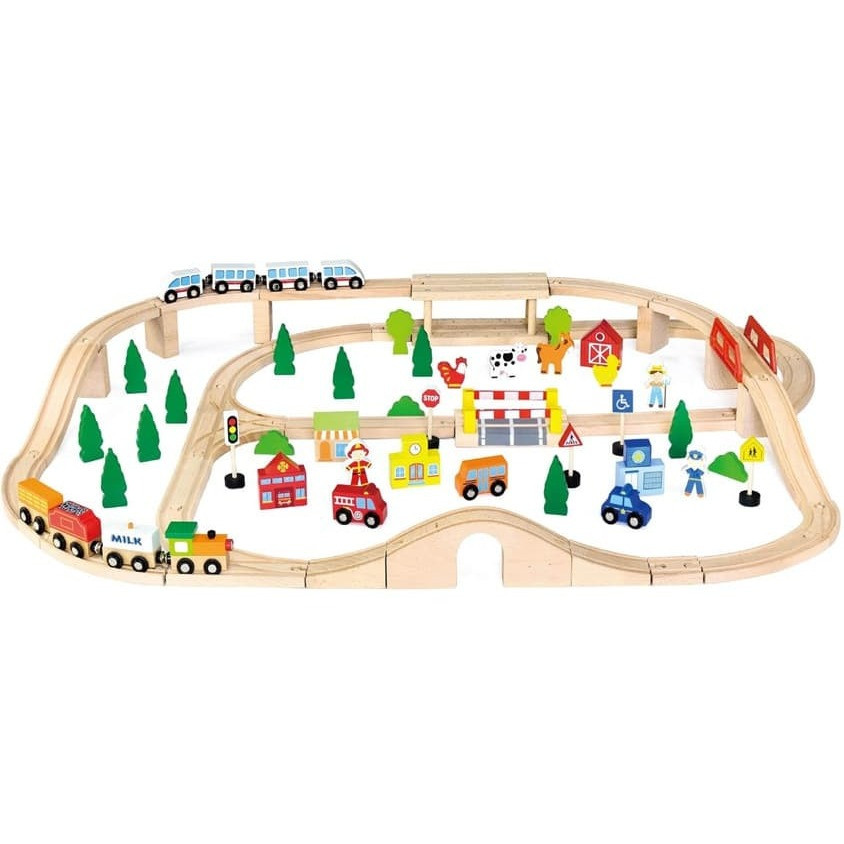
In a NAEYC guide to children’s building play (PDF), early childhood author Rosanne Regan Hansel describes a teacher helping a five-year-old design a block train station. The teacher notices where the building fell and asks what the child might try next. You can use the same approach with a railway. Before moving a piece yourself, ask, “Where do you want these two ends to meet?” Give your child a moment to point or try a different rail.
Slide the engine up to the gap and look at the ends together. Are they pointing towards each other, or passing side by side? If they’re side by side, invite your child to change a curve further back. If the ends face each other with a gap between them, they can look for a short straight to fill it. And if they’ve had enough building, the gap makes a perfectly good place for two stations.
If you’re choosing between sets as a gift, our comparison of five wooden train sets covers more play styles, from passenger trains to a mountain mine. You can also browse all wooden train sets at KindtoKidz.