How to Choose a Wooden Play Kitchen That Fits Your Child and Your Space
Nov 19, 2026
Picture your child making you lunch. Do they like stirring a pot beside you, lining up cups for a tea party, or taking everyone’s order and insisting you wait until the pizza is ready? Each of those games asks something different of a wooden play kitchen. One needs a comfortable bench, another needs somewhere to set the cups, and the third needs room for a customer.
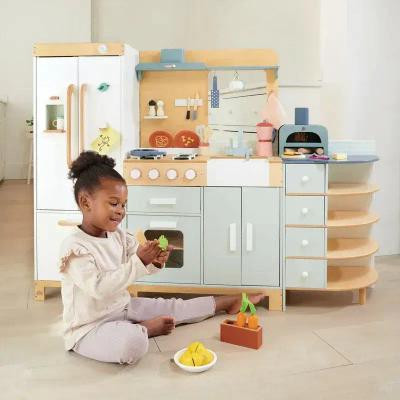
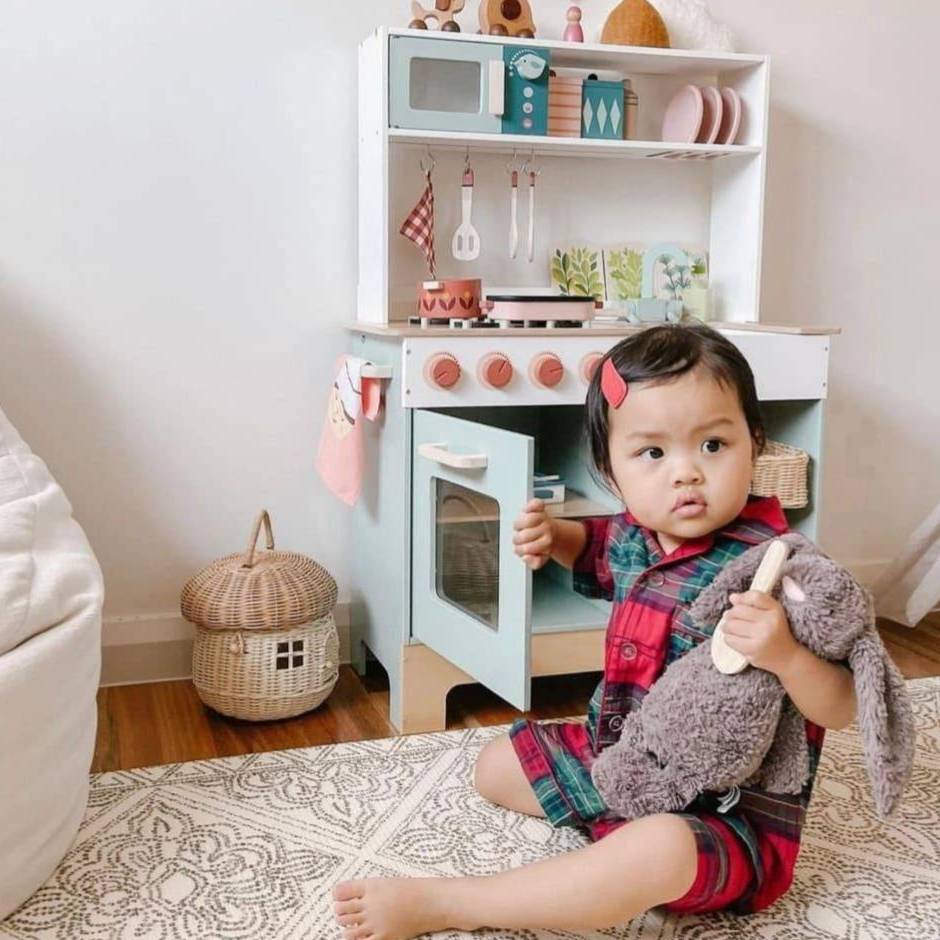
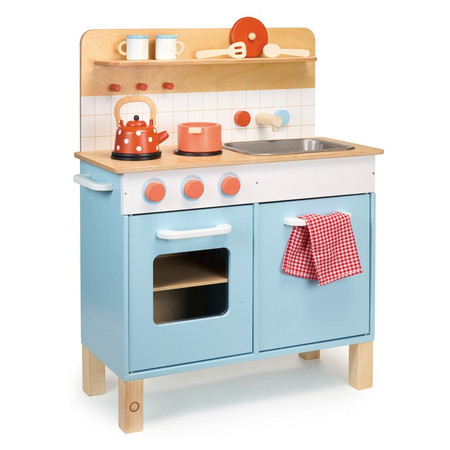
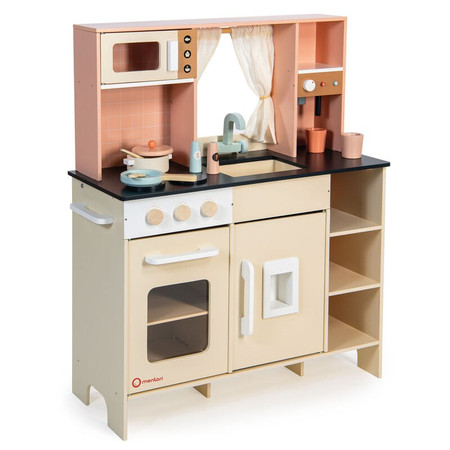
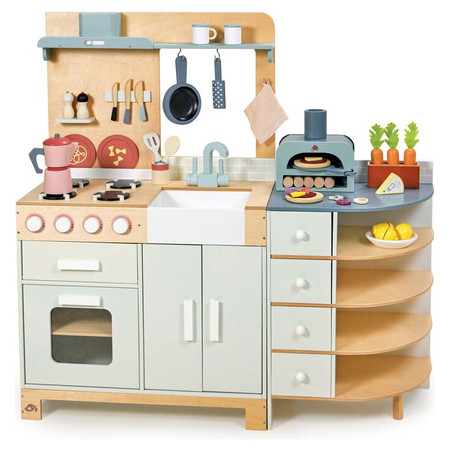
Start with the game your child already loves. Then check whether the kitchen gives them enough room to play it. Here’s how to tell, even when you’re shopping online. Measurements below are the overall width, depth and height. The height includes the back panel or highest point. 62 cm wide × 28 cm deep × 75 cm high · Ages 3+ A good starting point for a shared living room or a narrow stretch of wall. It’s the shallowest of these three, and the teapot, two cups and lidded casserole pot give a child two familiar games straight out of the box. They can make you a cuppa while dinner cooks. 77.7 cm wide × 32.5 cm deep × 91.4 cm high · Ages 3+ A good fit for a child who copies your morning routine. They can get something from the fridge, put a pan on the hob and serve coffee from the espresso maker. A frying pan, casserole pot and coffee cups are included. The microwave buttons are illustrated, while the cooker knobs turn and click. 100 cm wide × 32.5 cm deep × 101 cm high · Ages 3+ Worth a look for siblings who like playing restaurant. One child can take a pizza order and choose toppings while another tends the cooker. The pizza oven comes with wooden logs, two pizza bases and toppings, so the restaurant game is part of the kitchen from day one.Three wooden play kitchens, measured side by side
Mentari Kid’s Kitchen
Mentari Cream Play Kitchen
Tender Leaf La Fiamma Grand Kitchen
Mark the kitchen’s width and depth on the floor with masking tape. Now put a toy pan inside the outline and invite your child to pretend to cook. Watch where their feet land when they stir, crouch to open the oven and turn around to serve you. That patch of floor in front is part of the play space too.
This matters most in a living room or beside a dining table. Pull the nearest dining chair out as though someone were sitting in it. Can your child still open the toy oven? If the kitchen will sit in a corner, check which way the fridge or cupboard door swings and whether the handle could meet the adjoining wall.
A useful comparison: The Mentari Cream and La Fiamma project the same 32.5 cm into the room. The La Fiamma uses an extra 22.3 cm along the wall. If floor depth is your constraint, either may work. If you have an 85 cm gap between pieces of furniture, only the Mentari Cream fits that width.
A kitchen listed as 91 cm high may have a tall splashback or microwave shelf. That measurement tells you whether it fits under a window. The measurement that tells you how it will feel to cook is the distance from the floor to the hob or preparation bench.
To work out what suits your child, put a mixing bowl on a low table they already use. Ask them to stir an imaginary cake. If they can see into the bowl, keep their shoulders relaxed and move the spoon comfortably, measure from the floor to that tabletop. You now have a useful personal reference when comparing kitchens. If the product page only gives the overall height, ask for the floor-to-hob measurement.
If your child usually plays seated, try the same activity in their usual chair. Check whether the chair can get close enough to the bench. A cupboard directly below the hob can affect their reach even when the worktop height looks right.
If you already own wooden cookware, take out the piece your child uses most. Measure a frying pan twice: once across the bowl and once from the far edge to the end of the handle. The first measurement helps you judge the hob. The second tells you how much room it takes to put the pan away.
For example, the pan in the Qtoys Natural Wooden Toy Pots & Pans set is listed at 21 × 12 × 2.5 cm. If your child likes sliding it into the oven, compare that 21 cm length with the usable shelf space and check the opening too. A kitchen’s outside depth includes the door and back panel, so it can’t tell you what fits inside.
Look for somewhere to put the next item as well. Once a pan is on the hob and a bowl is in the sink, where will the plate go? A child who loves dishing up dinner may get more use from a clear patch of bench than from another built-in appliance.
For two children, try tracing two jobs through the product photo. Imagine one child washing vegetables while another opens the oven. Can both reach what they need? Now imagine the oven door open. If one child has to step aside every time the other checks dinner, the layout may suit one cook at a time better.
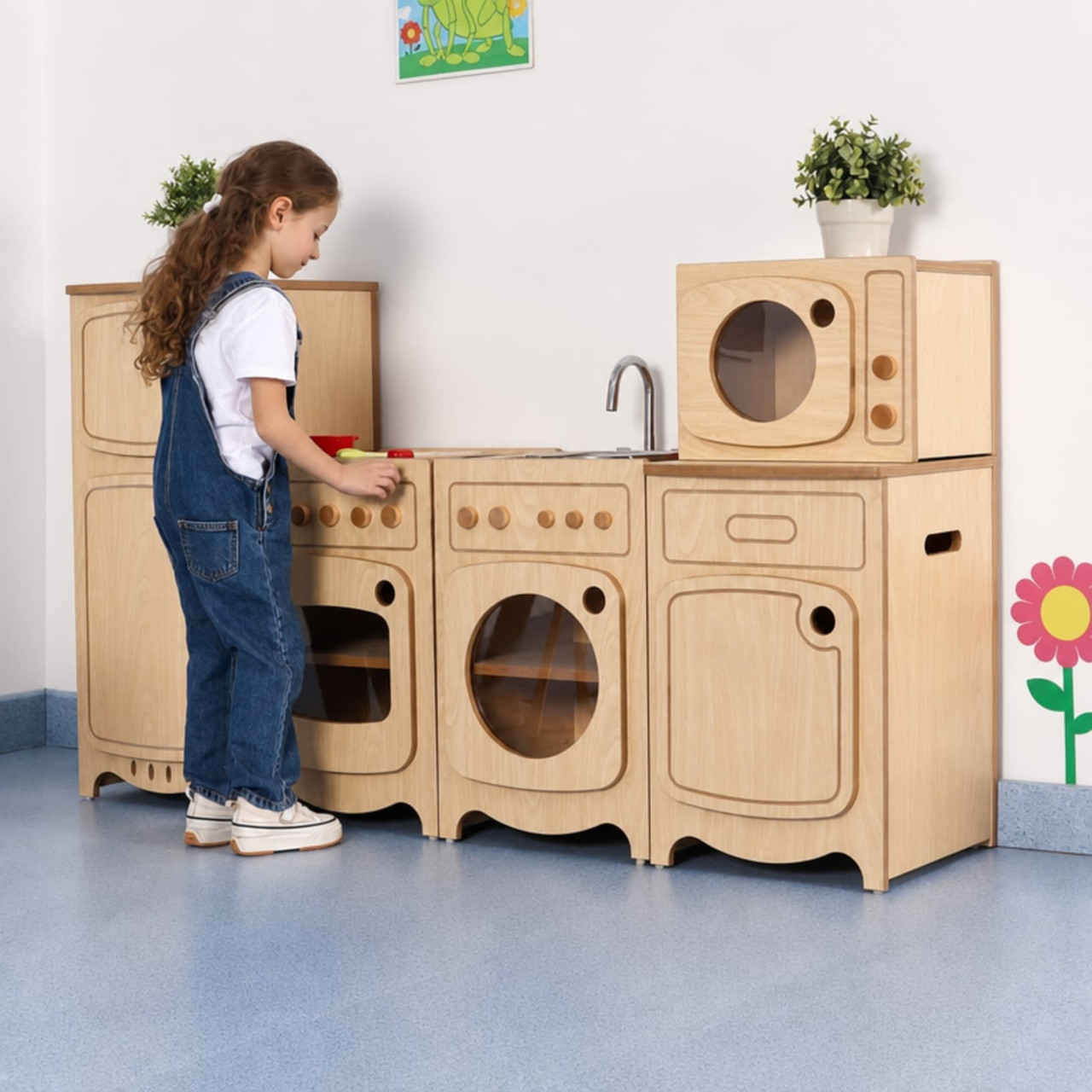
For a childcare centre, separate units give you another option. The Kinder Play Natural Home Corner Kitchen Set has individual cooker, sink, fridge, microwave and cupboard pieces. You could place the cooker and sink together, then position the fridge further along so a child collecting ingredients has their own approach. The units come assembled, and individual pieces or customised sets are available. When planning a centre fit-out, include your suburb and postcode when requesting a freight quote.
Before adding accessories, pick one meal your child would love to make and follow it from start to finish. For a café breakfast, can they cook, pour and serve? For pizza night, can they choose a topping, bake the pizza and hand it to someone on a plate? Check the product’s inclusions against that little sequence. It’s an easy way to spot what’s missing and avoid buying a second set of pans or cups.
When you’ve narrowed it down, compare your favourites in the KindtoKidz wooden play kitchen range. Keep three things beside you as you browse: the width of your space, a comfortable bench height for your child, and the game they’ll want to play first.